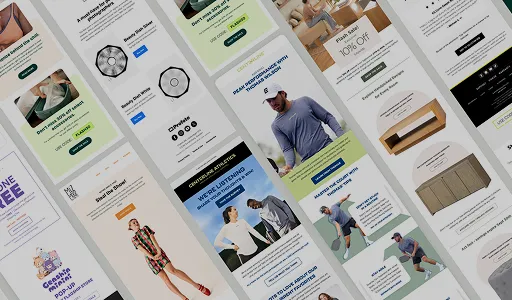
Ecommerce Email Marketing Agency That Grows Revenue and Retention
Paid acquisition brings customers in. Retention marketing is what makes them worth acquiring. At InboxArmy, we build lifecycle marketing programs that turn first-time buyers into long-term customers, compounding revenue from the list you are already paying to build.

-
$1B+
Email Revenue
-
5,000+
Brands
-
16 Years
Only Email and SMS

Andrew Bowman
E-Commerce B2C Director



"I searched through a number of forums and word of mouth on the web, and their name consistently came up. They have been in business longer than any email marketing company that I can remember talking with."
Our company needed to revamp our entire email system for our main brand of bicycles, Sixthreezero. We hired InboxArmy to build out new automated flows, post purchase email flows, marketing campaigns, and anything else we could come up with to stimulate our sales. I worked with the director and his designers to develop the emails that would connect with our target market. InboxArmy managed me, I literally had to keep up with how fast they work.
Immediate increase in revenues, our return customer conversion rate increased by roughly 50%, and our open to click rates all increased. The ROI was about 26 to 1. Zero complaints, our resources were not wasted hiring InboxArmy.
Ecommerce Brands We Work With
We have built ecommerce email and lifecycle marketing programs across fashion and apparel, home and living, health and wellness, beauty and personal care, food and beverage, sports and outdoor, consumer electronics, and subscription commerce. The strategy accounts for what is different about each one.
- LINE FRIENDS
- Warehouse-Lighting.com
- Bloomnet
- Sherwin Williams
- SimplyFun
- Literati
- Danbury Mint
- USANA
- Sedano's
- Midwest Supply
- First Coffee
- Runway Rogue
- DiscountFilters
- Sok It
- Qualia
- Willow
- Venus Group
- KC
- Purple
- Condition 1
- Catastrophic Creations
- illy
- varsity
- Fuel Rod
Ecommerce Email and Lifecycle Marketing Services
InboxArmy offers you a full-service ecommerce email marketing team to deliver to you:

Ecommerce Email Strategy and Lifecycle Marketing
We map out your ideal customer journey, including retention, repurchase triggers, and loyalty loops. Your lifecycle program will be built with clear revenue expectations for every phase of your marketing lifecycle.

Ecommerce Campaign Management
We provide end-to-end campaign management for your brand, including planning monthly calendars, content planning, copy, design, production, optimization, and reporting. We ensure every campaign aligns with brand direction and promotional opportunities.

Ecommerce Email Automation and Lifecycle Flows
We plan and optimize the entire ecommerce flow of emails, including welcome, abandoned cart, browse, browse abandon, thank you, post purchase, winback, VIP, loyalty, and anything else your email program needs.

Email Design and Coding for Ecommerce
This is where beauty meets science meets function. We design brand-specific, custom-coded ecommerce email templates that are optimized in best practices for mobile, accessibility, and deliverability.

Ecommerce Email Segmentation and Personalization
We build advanced segmentation systems based on customer engagement, buying behaviors, lifecycle stages, and predictive metrics. We also personalize campaigns and their timing, so every customer sees the content tailored just for them.

Ecommerce Email Deliverability Management
Your revenue won't depend on guesswork anymore. We monitor domain reputation and list health to keep you in the inbox, not the spam folder. Our experts identify issues early on and provide timely fixes to maintain stable deliverability.

ESP Vendor Evaluation and Migration
We are platform-agnostic and can provide unbiased recommendations for evaluating new ESPs that fit your program needs and budget. And should you decide to make a change, we can help you with the migration, too.

Reporting & Revenue Attribution
We create custom dashboards that show exactly what email and SMS contribute to your overall revenue. Our thorough tracking and reporting will help the decision makers act on them immediately.

SMS Marketing for Ecommerce
We handle creative and production for all of the "inboxes." Let InboxArmy create a custom strategy for your business and audience.
Trusted by the National Retail Federation (NRF), the World's Largest Retail Trade Association

For three years, InboxArmy has managed email marketing execution for the National Retail Federation, which represents retailers and industry partners across the United States and around the world.
We operate as an extension of NRF's marketing team, overseeing email production, QA, scheduling, and deployment through Salesforce Marketing Cloud to ensure high-volume event and sponsor campaigns launch accurately and on schedule.
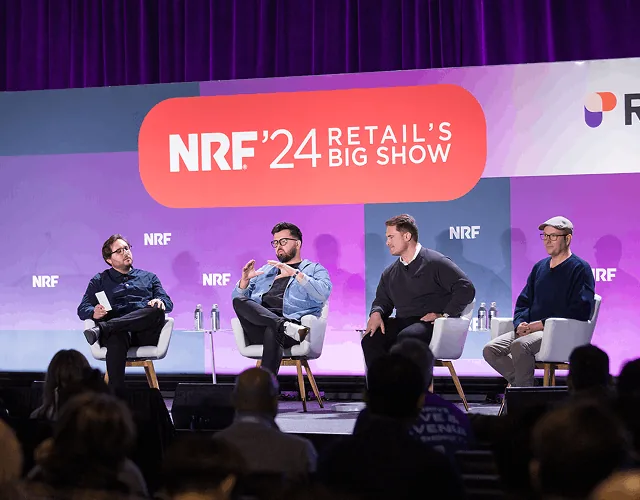
3 years of ongoing partnership with NRF
We support NRF Retail's Big Show, NRF PROTECT, NRF Nexus, and more
Supports NRF-owned communications and third-party sponsor campaigns
Full SFMC lifecycle management, from campaign setup through post-send monitoring
If the organization at the center of the retail industry trusts InboxArmy with email execution at this scale, your ecommerce program is in capable hands.
Talk to UsEcommerce Email Marketing Case Study

Maven Lane had strong products, a premium brand, and an email program generating almost nothing. No automated flows. No campaign calendar. Sends going out without a strategy.
The rebuild was structured around how their customers actually shop for furniture, longer consideration windows, concerns around quality and delivery, and a price point that requires more reassurance before a first purchase. The welcome series, abandoned cart recovery, and post-purchase sequence were all built around those realities.

Total email revenue in six months:
$700,000+
Revenue from automated lifecycle flows:
$641,826
Welcome series average open rate:
88.75%
Single Labor Day broadcast campaign revenue:
$52,930
Every Ecommerce Client
Gets a Dedicated Team
Account manager
as the single point of contact
Designer




We work across 40+ ESPs
Whatever email marketing platform your ecommerce business runs on, we have built retention and lifecycle programs inside it. Our job is to build a retention and lifecycle marketing program that performs on any platform you're on.










What makes InboxArmy the right email marketing agency for ecommerce brands?

Strategy-First
We'll get to understand your business and apply the best practices and strategies that work for your product and your customers.

Vendor-Agnostic
Whether it's Klaviyo, Braze, Iterable, HubSpot, MailChimp, Salesforce, Cordial, or others, we have the expertise (and we don't take platform commissions).

Technically Proficient
We solve issues that derail ecommerce success: Domain reputation, segment decay, flow misfires, attribution errors, and more.

Ownership from End to End
We can handle it all, from strategy to creative, coding, QA, deployment, analytics, and optimization.

Christina Huynh
Senior Product Manager

“InboxArmy came recommended through our head of growth marketing- deciding factors included budget, experience in the space, and immediate availability.”
It’s rare to see an external vendor so invested in our success. And yet, that’s exactly what we have experienced with InboxArmy. Each member of the IA team is always hyper-focused on the success of our campaigns. Right from Day 1, these guys have worked hard to set up streamlined workflows, design and code world-class emails, and even coordinate with our developers to set up the proper data architecture to trigger emails. If that’s not all, they consistently go above and beyond the regular scope of work to address problems and optimize every campaign. We hardly ever feel the pain of any issues because these guys are there to proactively resolve them as early as possible. Amazingly, nothing ever seems to faze them. At one point, we switched ESPs quite suddenly, but the IA team took it in in stride and none of our campaigns were affected. Very impressive indeed!
Compare Your Email Program Against These Retention Benchmarks
Use these directional indicators to spot where your retention program may be losing ground. Every brand and audience behaves differently; these aren't guarantees, but they're useful reference points.
| Benchmark | What Well-Run Programs Tend to Show | What It Often Means When You're Below |
|---|---|---|
| Automation & Retention Flow Revenue | Automation revenue tends to account for 30–40% of total email revenue in well-run lifecycle programs. | Below 20%? Usually incomplete flow coverage or cart sequences without escalation logic. |
| Welcome Series Conversion | New subscribers typically convert to first-time buyers within 72 hours of opt-in. | Leading with brand story before the subscriber decides they're interested. |
| Abandoned Cart Recovery | Recovery typically requires at least 3 emails with escalating urgency + 1 offer step. | Single cart email = recoverable revenue uncollected daily. |
| Post-Purchase Retention | The window between first and second purchase is the highest-leverage moment in lifecycle marketing. | Flow ending at order confirmation ≠ retention program. |
| Deliverability Health | Open rate swings of 10–15+ points between comparable sends (without content changes) warrant investigation. | Usually an infrastructure-level issue, not creative. |
| List Health | Active acquisition should grow (not flatten/decline) the list. | Flat/declining list = high unsubscribes + poor new subscriber engagement. |
| Attribution Accuracy | ESP revenue and ecommerce platform revenue should reconcile. | When they don't, optimization decisions are built on unreliable data. |
Not sure where your program stands?
Schedule a Free ConsultationHow Our Ecommerce Email Marketing Agency Builds Successful Lifecycle Marketing Programs
We start strong and consistently deliver value for ecommerce brands who want expertise and clarity at every step. These onboarding steps and value-delivering steps include:
Initial Audit and Technical Review
We'll get to know your program inside and out, including your technical guardrails, setups, flows, campaigns, deliverability and more.
Your 90-day Strategic Roadmap (Rolling)
We'll set the plan for your program for your first 90 days, including automations, foundational fixes, campaigns, and more.
Your 90-day Campaign Calendar (Rolling)
We'll map your campaign cadence, write briefs, and get rolling on your campaigns.
Execute on Creative, Production and Deployment
This is where the rubber meets the road. We don't just plan; We execute.
Regular Reporting and Optimization
We'll track performance, make adjustments, optimize campaigns and your plans.
“Revenue per email sent up more than 15%, Bulk email sends up from 1 per week to 3-4 per week, Trigger/automated campaigns from 2 to over 13, producing over 20% of program revenue”
We found them through an online search and selected them because of high ratings, good value for cost and no unneeded extras. InboxArmy is responsible for managing the segmentation, creative coding, scheduling, and execution of all bulk, targeted, and automated email campaigns for GoodwillFinds. Additionally, they help manage our instance of Salesforce Marketing Cloud. Campaigns and workstreams were always delivered on time and they have been very responsive with emergent requests that arise due to changes in business conditions.
They seem to be working around the clock. It's amazing how much they get done while I'm sleeping!

Jim Davis
CRO

E-commerce FAQ Questions
-
How much does it cost to work with an ecommerce email agneices?
It depends on what you actually need. Scope drives pricing: number of emails per month, whether you need automation builds, a platform migration, or full ongoing management. List size and lifecycle complexity factor in, too.
We offer retainer-based engagements and project-based work. A one-time flow setup is scoped differently from a full-service monthly program. We won't know the right number until we understand your program. Schedule a consultation, and we'll give you a straight picture.
-
What email flows does every ecommerce brand need, and do you build all of them?
The foundational ones: welcome series, abandoned cart, browse abandonment, post-purchase, replenishment, winback, and VIP/loyalty. Most brands have two or three of these live; few have all of them working well.
We plan, write, design, code, and deploy every flow. Beyond the core set, we build sequences specific to your product type, buying cycle, and platform data. A consumables brand needs a replenishment trigger that a one-time purchase brand doesn't. A high-AOV brand needs a longer consideration sequence than a $30 impulse buy. We build for what your customers actually do, not a generic ecommerce template.
-
How do you improve customer retention and repeat purchase rates through email?
Most retention problems aren't retention problems. They're timing problems. A customer who bought once and never came back usually didn't get a reason to return at the right moment.
We build post-purchase sequences that educate, cross-sell, and re-engage before the window closes. We use purchase frequency data to identify who's trending toward lapse and trigger winback campaigns before they're already gone. Customers who've churned are significantly harder to recover than customers who are simply going quiet. The difference in results is substantial.
Every lifecycle program we build has CLV growth built into the structure, not added later as an afterthought.
-
Do you work with brands on Shopify, WooCommerce, or other platforms?
Yes. Shopify, Shopify Plus, WooCommerce, Magento, BigCommerce, and custom builds. Platform support isn't the hard part. The hard part is making sure your store data, purchase history, browse behavior, and cart activity flow correctly into the segments and triggers that drive revenue. A lot of programs fall apart there. Our team handles the integration directly, so you're not debugging a broken data connection six weeks after launch.
-
Can you take over from an existing agency or in-house team without disrupting our campaigns?
Yes, and it's not an unusual situation. We've stepped into programs mid-flight, inherited messy setups, and taken over from agencies that weren't delivering, all without dropping campaign cadence.
The audit phase is specifically designed for this. Before we touch anything live, we map everything that's running: flows, campaigns, suppression lists, authentication setup, and platform configuration. Nothing gets changed until we understand what's there and why.
-
Do you handle copywriting and design, or do I need to provide those?
We handle both. Copywriters and designers who specialize in ecommerce email, not generalists pulled from other disciplines.
You provide brand guidelines, product assets, and feedback. We handle copy, design, HTML coding, QA, and deployment. If you have an in-house creative team and want to keep them involved, we can work within that structure too. Most clients find it's easier to hand it off entirely, but the collaboration model works when there's a strong internal creative direction worth preserving.
-
Do you work with small DTC brands or only large enterprises?
Both, and the work looks different depending on where you are.
Early-stage brands typically need the foundation built: flows, templates, and a deliverability setup that won't hurt them later. Larger brands usually have the pieces in place, but aren't getting the most out of them. We've worked with brands starting from zero in email and with enterprise programs at the scale of Zappos and eBay.
We scope based on where you actually are. We've built from zero and optimized at enterprise scale. The size of the program doesn't change how seriously we take it.
-
What makes InboxArmy different from other ecommerce email agencies?
We've been doing this for 16 years, and email is still the only thing we do. Not a generalist digital agency with an email team bolted on. 120+ people whose entire job is email and SMS, with certified expertise across 40+ platforms.
The practical difference: when you've run programs across hundreds of ecommerce brands, you stop testing things that have already been tested. You know which flows move revenue for which product types, which deliverability fixes actually hold, and where most agencies leave money sitting. That cross-brand experience is what an in-house team or a generalist agency can't replicate.
Across our client base, we've attributed $180M in email revenue. That number comes from brands at every stage, from early DTC to enterprise.
-
Can you help if we only need one specific thing, like fixing our flows or a deliverability problem?
Yes. Project-based work is a real option alongside full-service retainers, not a consolation offering.
If you need a one-time flow build, a deliverability audit, an ESP migration, or a template redesign, we scope it as a standalone project. You get the same team and the same standard of work, just contained to the specific problem you're solving.
A lot of clients start this way. A focused project is a reasonable way to see how we work before committing to ongoing management. Some stay project-based because that's genuinely all they need. Either way works.
Interested In Collaborating?
Get in touch today!
Enter your information below to request a free, no-obligation consultation.


“We looked at 16 different agencies, interviewed 8 of them and selected InboxArmy as number 1 pick.”
We hired InboxArmy to redesign Salesforce Marketing Cloud emails. The goal was to create a new master template that matched branding using industry best practices. After we signed the SOW, we had a couple discovery calls, submitted our brief and branding document. Once we were on the same page, InboxArmy did design in batches, we had 3 rounds of reviews and once all was finalized IA coded and implemented the templates for us in MC.
During discovery calls, members of IA were present (covering design and coding). After that we always communicated with our representative, Charlie. Being able to understand branding and our needs, design capabilities, coding pace, responsiveness and always willing to go step beyond for this project.
Felt like IA and we were on the same team.